
Deconstructing Motherhood is an intentional exploration into the social and historical construction, possibility, and responsibility of motherhood and mothering in the 21st century and beyond.

Welcome In Beloved!
Through this study, we will examine how motherhood is socially and historically constructed and understand how oppressive ideologies have shaped the traditional notion of what it means to be a "good" mother. We will also explore how mothers can break free from these narrow confines and work towards redefining their roles as agents of change and possibility.
Our Monthly Timeline
This is the monthly timeline for our journey together. You'll log into this portal each month to access the course materials. Throughout the month, you'll receive email notifications as materials are released as a reminder so you know when to log into the portal.
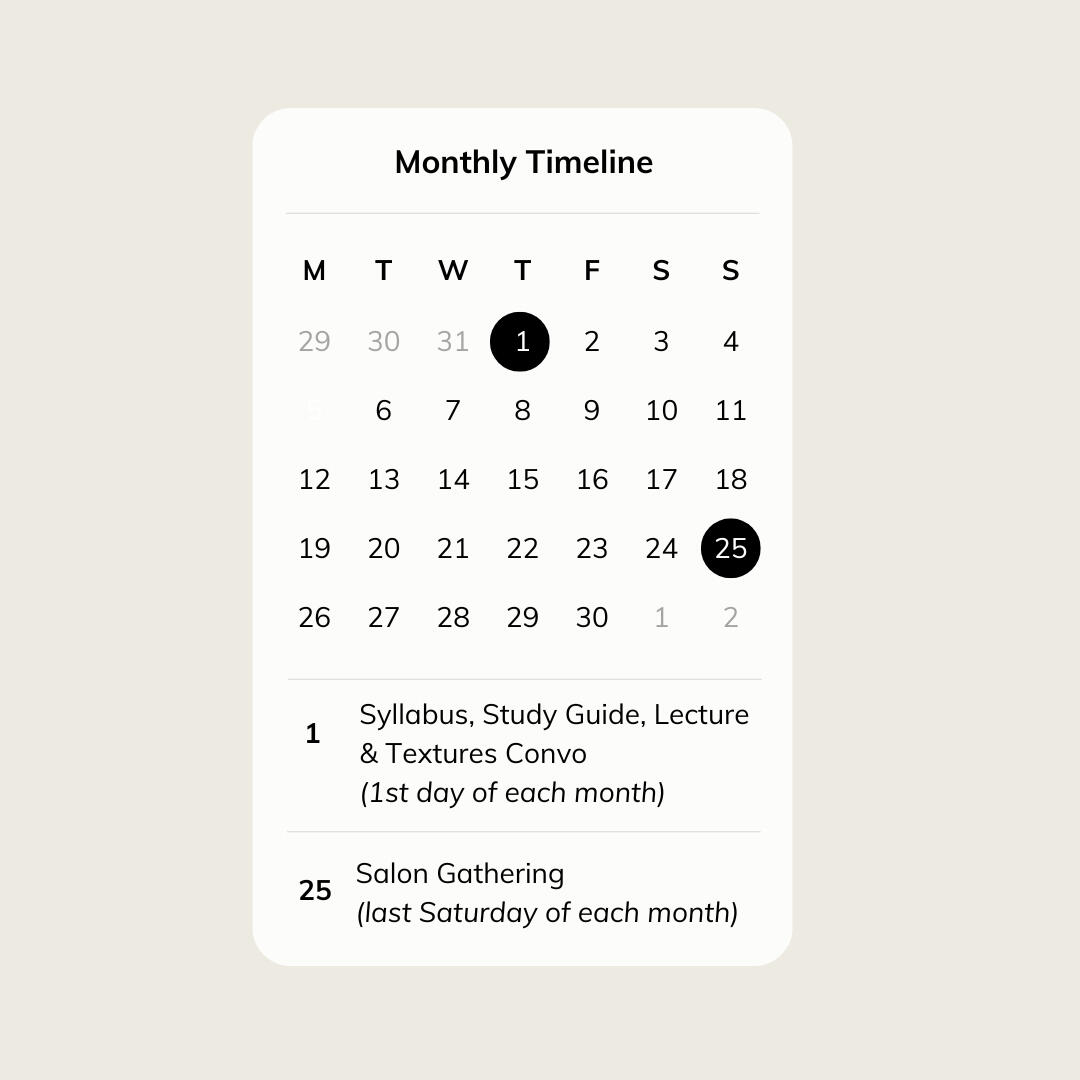
Monthly Study Guide (First of Month)
On the first of each month, you’ll receive a study guide designed to help you organize and focus on the main ideas and key points of the texts we're reading that month. This study guide aims to make complex topics more manageable by summarizing and explaining essential themes and concepts, helping to enhance your understanding and reinforce your learning.Oct 1st, Nov 1st, Dec 1st, Jan 1st,
Feb 1st, Mar 1st, Apr 1st, May 1st
Monthly Textures of Motherhood Convo (First of Month)
On the first of each month, listen in as Toi and a guest get candid and intimate about their motherhood journeys. These conversations are meant to counter the narrative produced by our dominant culture that says women are not supposed to tell the truth about how mothering and motherhood have deeply impacted our lives…in all the ways.Oct 1st, Nov 1st, Dec 1st, Jan 1st,
Feb 1st, Mar 1st, Apr 1st, May 1st
Monthly Salon Gathering (Last Saturday)
We'll gather on the last Saturday of each month from 1 pm est - 2 pm est, to discuss the current month's material. This gathering is a chance to connect with and hear, in real-time, how your fellow participants are working to understand, question, and deconstruct motherhood.Oct 25th, Nov 29th, Dec 27th, Jan 31st
Feb 28th, Mar 28th, Apr 25th, May 30th
Our Journey Together
Below you'll find the roadmap for our time together.
As we journey along, simply click on the current month
that we're exploring to access the material for that month.
LATE SEPTEMBER 2025
Opening / GroundingSat, September 27th
1 pm est - 2 pm estWe’ll start with a session to orient and ground our time together. During this time, we’ll get to know each other, get to know the container, and spend time answering questions/concerns.
Section One
Unpacking The Role: Mothering, Motherhood,
and the System We Inherited (And Uphold)
October 2025 / November 2025This section is about learning to see clearly. To untangle the difference between motherhood—an institution shaped by heteropatriarchy, white supremacy, capitalism—and mothering, a practice that can be reclaimed, reshaped, and rooted in something more liberatory.We name the waters we’re swimming in not to drown in them, but to understand how deep they go, how this system defines what makes a “good mother,” who is allowed to mother, who is resourced to mother, and who is punished or surveilled for it.At the same time, we turn inward to notice what happens to us when we become mothers. How matrescence—this radical, ongoing transformation of body, identity, and self—often goes unseen and unsupported. But it matters. Because we are not who we were before, and that shift is both a grief and a becoming.
This is our grounding: to witness the structure, to tell the truth about it, and to begin the slow, beautiful work of imagining what mothering can be when we do it on our own terms, and in connection with others.
Section Two
Naming The Cost: Labor, Erasure,
and the Emotional Economy of Care
December 2025 / January 2026This section is about calling out the full scope of what mothering under capitalism demands: the unpaid labor, the invisible labor, the emotional labor. The kind of labor that keeps everything running but is rarely acknowledged, let alone supported. We’re talking about the caregiving, the managing, the remembering, the anticipating, the holding…so much of it expected, so little of it seen.
We name how this labor isn’t distributed equally. It’s racialized. It’s classed. It’s feminized. And for Black mothers and other mothers of color, the cost is often greater, the visibility lower, the stakes higher.
Section Three
Mothering Otherwise: Revolutionary, Relational,
and Refusal-Based Mothering
February 2026 / March 2026In this section, we explore mothering as an act of refusal. A refusal of perfection, of martyrdom, of doing it all alone. A refusal of the narratives that tell us our power only comes through control. We look to those who have long mothered at the margins—Black, Brown, queer, disabled, unschooling, and abolitionist lineages—to learn what it means to care in ways that resist domination and cultivate freedom.But this isn’t just about resisting systems…it’s about repairing relationship. We begin to ask: What does it mean to mother in a way that is relational rather than hierarchical? What happens when we choose to see children not as problems to manage or futures to mold, but as full people worthy of respect, presence, and reciprocity right now?This section invites us to move out of adult supremacy and into deeper connection. To learn the inner workings of the developing brain, attachment patterns, and nervous system needs, not as tools of control, but as pathways to understanding. We turn toward the whole child, and in doing so, we begin to re-parent parts of ourselves, too.
Section Four
Beyond The Family: Kinship, Collectivity, and the End of Ownership
April 2026 / May 2026If the family isn’t the only container for care, then what else is possible?
This section is an invitation to look beyond the nuclear family as the default structure for raising children, meeting needs, and building belonging. We ask what it might look like to root ourselves in kinship, not just biology. In collectivity, not just individual households. In shared care, not just survival behind closed doors.We name that the nuclear family—especially in its white, middle-class ideal—was never meant for all of us. It isolates, overburdens, and often reproduces power and control. And while we may find love or connection there, we also have to tell the truth: this structure is not the only way. It’s not even the oldest way.So in this section, we look toward practices of communal mothering, chosen family, mutual accountability, and shared responsibility. We remember what many of us already know in our bones—that we’re not meant to do this alone. That children don’t just belong to individual parents. That care is strongest when it’s held in many hands.
If there is anything you need, please don't hesitate to reach me at [email protected]To update or view your payment information click here

Section One
Unpacking The Role: Mothering, Motherhood,
and the System We Inherited (And Uphold)
This section is about learning to see clearly. To untangle the difference between motherhood—an institution shaped by heteropatriarchy, white supremacy, capitalism—and mothering, a practice that can be reclaimed, reshaped, and rooted in something more liberatory.
OCTOBER SYLLABUS & STUDY GUIDE
Below you’ll find this month’s syllabus and study guide. Each piece can stand on its own, but together they create a fuller picture of the section we’re exploring. Engaging with all of them will give you a deeper understanding of this part of our journey.Click the title to access the reading
Denial of the Mother: Denial of the People
By Monica Sjöö & Barbara MorThis chapter from the book "The Great Cosmic Mother" uncovers how patriarchy and Christianity worked to erase and demonize the Mother, both the earth and women as life-givers. It traces how this denial fueled violence, exploitation, and war, while reminding us of the older, earth-honoring traditions that held life and the feminine as sacred.
Racism and Patriarchy in the Meaning of Motherhood
By Dorothy RobertsThis essay examines how the meaning of “motherhood” has always been racialized and shaped by patriarchy. It shows how Black, Indigenous, and immigrant mothers have been surveilled, punished, and devalued, while white, middle-class motherhood has been idealized and protected.
Beyond Mothers & Fathers: Ideology In a Patriarchal Society
By Barbara Katz RothmanThis text pushes us to imagine parenting beyond the rigid categories of “mother” and “father.” It calls for communities that share care, where “mothering” becomes a practice anyone can embody—not tied to gender, but rooted in attentive love, responsibility, and collective survival.
Matricentric Feminism as Scholarship
By Andrea O'ReilyThis work lays out “motherhood studies” as its own field, grounded in maternal theory. It unpacks how “motherhood” as an institution is oppressive, while “mothering” as lived practice can be resistant and liberatory. It also maps the key theories and debates that help us see how patriarchal motherhood functions, and how it can be challenged.
OCTOBER LECTURE
Below is the lecture for this section—an audio offering to help ground the material in lived experience and connect it to our collective meaning.Reminder: You can also access this lecture
through your fav podcast app if you opted in
OCTOBER TEXTURE OF
MOTHERHOOD CONVERSATION
Below is this month’s Textures of Motherhood episode, which is a heartfelt conversation between me and a guest as we open up about our motherhood journeys.Reminder: You can also access this conversation
through your fav podcast app if you opted in
In this conversation, my guest Crystal Sanchez and I discuss the complexities of mothering beyond biological ties, focusing on Crystal's experience as a stepmom.We explore the evolution of family dynamics, the importance of communication, and the political implications of motherhood. Crystal shares her journey of navigating relationships with her stepchildren and their biological mother, the challenges of wanting children, and the lessons learned from raising teenagers.The conversation emphasizes the significance of personal growth, understanding, and the need for grace in blended families.
October Salon Gathering
Sat, Oct 26th
(1 pm est - 2 pm est)Zoom LinkTime Zone ConvertorPlease remember that none of our live sessions are recorded to honor the privacy of everyone participating and allow for deeply honest conversations. I encourage you to show up live if you want to experience the magic and be a part of the conversation.

Section One Pre-Assessment
Unpacking The Role: Mothering, Motherhood,
and the System We Inherited (And Uphold)
1. On a scale of 1–5, how clearly can you tell the difference between motherhood (the institution) and mothering (the practice)? (1 = Not at all clear, 5 = Very clear)2. Sentence Completion:Motherhood makes me feel __________________ because __________________.Mothering makes me feel __________________ because __________________.3. What messages did you inherit (from family, culture, or media) about what a mother should be?4. Reflect on this statement:
“Society defines what makes a ‘good mother’ in ways that reflect larger systems of power.”Do you agree or disagree? Why?5. On a scale of 1–5, how supported did you feel in your transition into motherhood (matrescence)? (1 = Not supported at all, 5 = Fully supported)

Section One Post-Assessment
Unpacking The Role: Mothering, Motherhood,
and the System We Inherited (And Uphold)
1. What new distinctions do you notice between motherhood and mothering?2. How has your understanding of how systems (capitalism, white supremacy, patriarchy) shape motherhood shifted?3. Where do you feel grief? Where do you feel a sense of becoming?4. What feels more possible for you in your practice of mothering now than before you started this section?5. What one insight from this section do you want to carry with you into the rest of the journey?

Section One
Unpacking The Role: Mothering, Motherhood,
and the System We Inherited (And Uphold)
This section is about learning to see clearly. To untangle the difference between motherhood—an institution shaped by heteropatriarchy, white supremacy, capitalism—and mothering, a practice that can be reclaimed, reshaped, and rooted in something more liberatory.
NOVEMBER SYLLABUS & STUDY GUIDE
Below you’ll find this month’s syllabus and study guide. Each piece can stand on its own, but together they create a fuller picture of the section we’re exploring. Engaging with all of them will give you a deeper understanding of this part of our journey.Click the title to access the reading
Matripotency: Ìyá, in Philosophical Concepts and Sociopolitical Institutions
By Oyèrónkẹ́ OyěwùmíThis chapter from “The Great Cosmic Mother” explores the Yoruba concept of Ìyá, the original mother principle. Oyěwùmí challenges Western ideas of motherhood as a gendered, subordinate role and reclaims Ìyá as a spiritual and creative force that transcends biology. Through Ìyá, life itself is understood as sacred, interdependent, and guided by the generative power of the Mother.
Matrescence: Lifetime Impact of Motherhood on Cognition and the Brain
By Multiple AuthorsThis scientific essay reframes motherhood as a lifelong developmental stage called “matrescence.” It shows how the brain and cognition adapt through caregiving, not as decline but as transformation. These changes expand empathy, focus, and resilience, challenging deficit-based narratives of “mommy brain” and honoring the neurological brilliance of care.
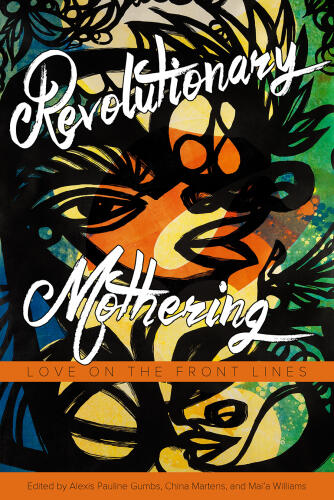
Preface from Revolutionary Mothering: Love on the Front Lines
By Loretta J. RossIn this preface, Ross situates “revolutionary mothering” within the lineage of women of color feminism and the Reproductive Justice movement. She defines mothering as a radical act — one that resists capitalism, white supremacy, and isolation by centering interdependence and care. To mother, in this frame, is to build worlds rooted in justice, connection, and collective survival.
NOVEMBER LECTURE
Below is the lecture for this section—an audio offering to help ground the material in lived experience and connect it to our collective meaning.Reminder: You can also access this lecture
through your fav podcast app if you opted in
NOVEMBER TEXTURE OF
MOTHERHOOD CONVERSATION
Below is this month’s Textures of Motherhood episode, which is a heartfelt conversation between me and a guest as we open up about our motherhood journeys.Reminder: You can also access this conversation
through your fav podcast app if you opted in
In this conversation, me and my guest Marina Nabão explore the many layers of motherhood, from how childhood shapes parenting to the challenges of fertility and the need for real support during pregnancy. Marina shares her journey of becoming a mom at 43, the intentional choices she made, and the sacredness of bringing life into the world.We discuss the importance of pleasure, healing, and community, as well as Marina's decision to have a home birth and the trust she developed in her body during labor. Marina also reflects on balancing motherhood and her professional identity, navigating guilt, and even the erotic nature of mothering.
November Salon Gathering
Sat, Nov 29th
(1 pm est - 2 pm est)Zoom LinkTime Zone ConvertorPlease remember that none of our live sessions are recorded to honor the privacy of everyone participating and allow for deeply honest conversations. I encourage you to show up live if you want to experience the magic and be a part of the conversation.

Section Two
Naming The Cost: Labor, Erasure, and the Emotional Economy of Care
This section is about calling out the full scope of what mothering under capitalism demands: the unpaid labor, the invisible labor, the emotional labor. The kind of labor that keeps everything running but is rarely acknowledged, let alone supported.
DECEMBER SYLLABUS & STUDY GUIDE
Below you’ll find this month’s syllabus and study guide. Each piece can stand on its own, but together they create a fuller picture of the section we’re exploring. Engaging with all of them will give you a deeper understanding of this part of our journey.Click the title to access the reading
What Is Social Reproduction and Why Should I Care?
By Premilla NadasenThis chapter shows how the work of sustaining life (caring for children, tending to households, supporting communities) has always been organized through racial capitalism. It traces how the social reproduction of white families has been protected while Black and Brown families have been surveilled, controlled, or denied support.
What Is Social Reproduction Theory?
By Tithi BhattacharyaThis essay explains that capitalism depends on labor power, and labor power is produced through everyday, often unpaid, care work largely performed by women. Social reproduction theory reveals how the spheres of production (workplaces) and reproduction (homes and communities) are deeply interconnected and shaped by class, race, and gender.
DECEMBER LECTURE
Below is the lecture for this section—an audio offering to help ground the material in lived experience and connect it to our collective meaning.Reminder: You can also access this lecture
through your fav podcast app if you opted in
DECEMBER TEXTURE OF
MOTHERHOOD CONVERSATION
Below is this month’s Textures of Motherhood episode, which is a heartfelt conversation between me and a guest as we open up about our motherhood journeys.Reminder: You can also access this conversation
through your fav podcast app if you opted in
In this conversation, me and my guest Dra. Rocio Rosales Meza dive deep into the realities of motherhood...its beauty, its challenges, and its radical potential. Rocio shares how she never thought she’d become a mother, partly because of the weight of being the eldest daughter, but how she later embraced it as both a spiritual calling and an act of resistance. We talk about breaking cycles, the betrayal of institutions, and the choice to unschool and raise a child outside of rigid gender norms. We explore what it means to mother in a way that centers freedom, co-creation, and deep love, not control or domination.
December Salon Gathering*
Sat, Dec 27th
(1 pm est - 2 pm est)Zoom LinkTime Zone ConvertorPlease remember that none of our live sessions are recorded to honor the privacy of everyone participating and allow for deeply honest conversations. I encourage you to show up live if you want to experience the magic and be a part of the conversation.

DECEMBER LIVE SESSIONS
Study Session: Wed, Dec 18th
(8 pm est - 9 pm est)Salon Gathering: Sat, Dec 28th
(1 pm est - 2 pm est)Zoom LinkTime Zone Convertor
DECEMBER READING
SCHEDULE
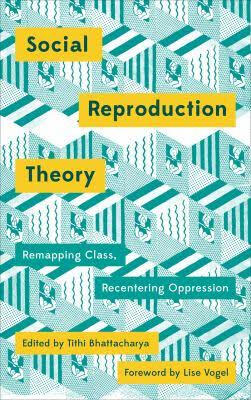
Anchor Book:
Social Reproduction TheoryRead:
Introduction
Chapter Two
Chapter Three
Chapter Four
(93 pages total)
DECEMBER
TEXTURES OF MOTHERHOOD
CONVERSATION
In this conversation, me and my guest Marina Nabão explore the many layers of motherhood, from how childhood shapes parenting to the challenges of fertility and the need for real support during pregnancy. Marina shares her journey of becoming a mom at 43, the intentional choices she made, and the sacredness of bringing life into the world.We discuss the importance of pleasure, healing, and community, as well as Marina's decision to have a home birth and the trust she developed in her body during labor. Marina also reflects on balancing motherhood and her professional identity, navigating guilt, and even the erotic nature of mothering.
Pre- and Post-Assessments
As a practice, it’s important to notice what you think and believe before you take in new information, and then reflect again afterward to see how your perspective has shifted. This is part of how we integrate learning and practice critical thinking. In that spirit, I invite you to complete the pre-assessment before you begin this section, and return for the post-assessment once you’ve finished.

JANUARY LIVE SESSIONS
Study Session: Wed, Jan 18th
(8 pm est - 9 pm est)Salon Gathering: Sat, Jan 25th
(1 pm est - 2 pm est)Zoom LinkTime Zone Convertor
JANUARY READING
SCHEDULE
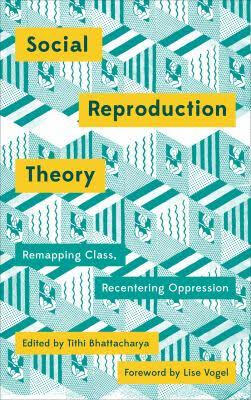
Anchor Book:
Social Reproduction TheoryRead:
Chapter Five - Chapter Ten
(102 pages total)
JANUARY
TEXTURES OF MOTHERHOOD
CONVERSATION
In this conversation with Danielle Cohen, I reflected on my journey through motherhood, exploring how my relationships with my four sons have evolved and how my upbringing and cultural context have shaped my approach to mothering. We discussed the challenges of being a single Black mother, the intentional choices I've made to foster attuned, empathetic relationships with my sons, and the deep work required to break intergenerational cycles of harm.I shared how I've grown to prioritize repair in my relationships with my children, working to show them care, respect, and curiosity in ways I didn’t always experience growing up. We explored the significance of being seen—both in our relationships and in the larger cultural context—and how that influences our sense of self and our ability to navigate the world.The conversation also touched on broader societal pressures, such as the isolating dynamics of the nuclear family and the systemic inequities that shape motherhood. We talked about my longing for more communal and collective ways of living and how I dream of creating a rich relational garden for myself and my sons, one that supports softness, ease, and a sense of connection. It was a deeply reflective and meaningful dialogue about identity, responsibility, and love, both within motherhood and beyond.

FEBRUARY LIVE SESSIONS
Study Session: Wed, Feb 19th
(8 pm est - 9 pm est)Salon Gathering: Sat, March 1st*
(1 pm est - 2 pm est)
*Our February Salon Gathering is a week later due to a scheduling conflictZoom LinkTime Zone Convertor
FEBRUARY READING
SCHEDULE
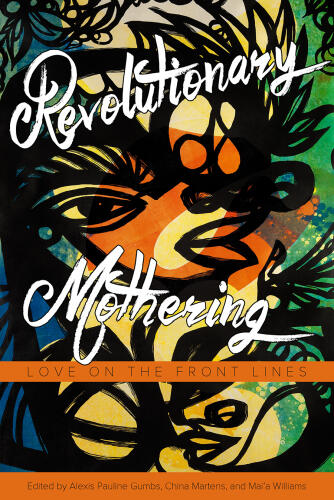
Anchor Book:
Revolutionary MotheringRead:
Preface - Page 108
(114 pages total)
FEBRUARY
TEXTURES OF MOTHERHOOD
CONVERSATION

MARCH LIVE SESSIONS
Study Session: Wed, March 19th
(8 pm est - 9 pm est)Salon Gathering: Sat, March 29th
(1 pm est - 2 pm est)Zoom LinkTime Zone Convertor
MARCH READING
SCHEDULE
Anchor Book:
Revolutionary MotheringRead:
115 - End of Book
MARCH
TEXTURES OF MOTHERHOOD
CONVERSATION
This conversation with Danielle Cohen is a deeply personal exploration of motherhood, relationships, and family structures. Danielle reflects on her journey from becoming a mother at 21 to raising four children across different life stages, first as a single parent and later with her second partner. She discusses the challenges of co-parenting with an inconsistent and sometimes harmful ex-partner, the physical and emotional toll of caregiving, and the difficulty of maintaining stability while raising children with strong values of self-awareness, justice, and bodily autonomy. She also shares the grief and complexity of navigating motherhood within societal expectations that place the burden of parenting disproportionately on mothers while excusing fathers.

APRIL LIVE SESSIONS
Study Session: Wed, April 16th
(8 pm est - 9 pm est)Salon Gathering: Sat, April 26th
(1 pm est - 2 pm est)Zoom LinkTime Zone Convertor
APRIL READING
SCHEDULE
Anchor Book:
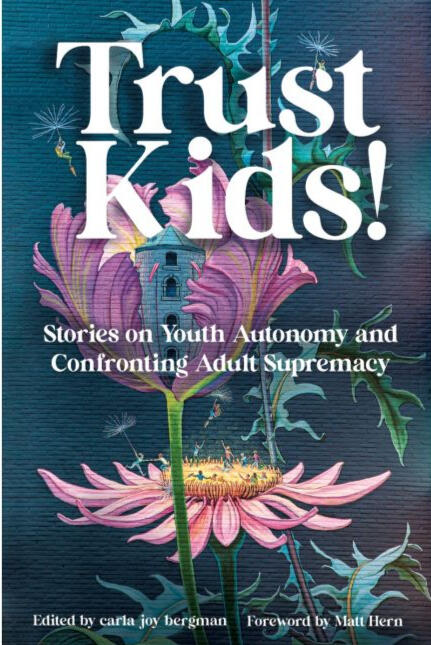
Trust KidsRead:
Introduction - Page 101
APRIL
TEXTURES OF MOTHERHOOD
CONVERSATION
This conversation is a candid and layered exploration between me and my beloved Nisha Moodley. We discuss so much, including single motherhood, co-parenting, and raising boys with a different set of values. We move between personal story and systemic critique, naming how patriarchy, capitalism, and the nuclear family isolate mothers and devalue care. We reflect on choosing solo parenting over partnership that drains, the grief and relief of shared custody, and the deep longing for true community and collective responsibility.

MAY LIVE SESSIONS
Study Session: Wed, May 21st
(8 pm est - 9 pm est)Salon Gathering: Sat, May 31st
(1 pm est - 2 pm est)Zoom LinkTime Zone Convertor
MAY READING
SCHEDULE
Anchor Book:
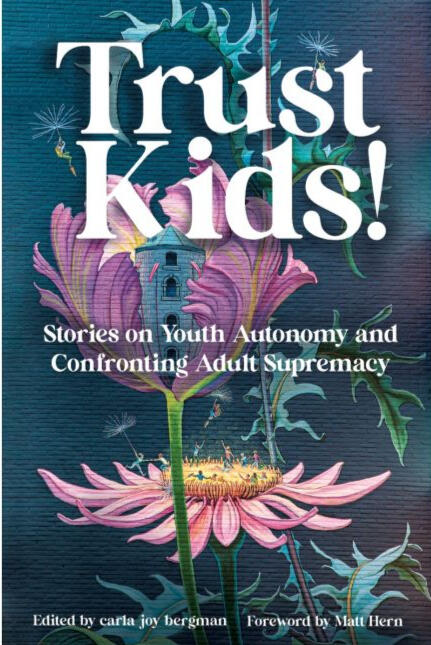
Trust KidsRead:
Pages 102 - 204
MAY
TEXTURES OF MOTHERHOOD
CONVERSATION
This conversation is a candid and layered exploration between me and my beloved Nisha Moodley. We discuss so much, including single motherhood, co-parenting, and raising boys with a different set of values. We move between personal story and systemic critique, naming how patriarchy, capitalism, and the nuclear family isolate mothers and devalue care. We reflect on choosing solo parenting over partnership that drains, the grief and relief of shared custody, and the deep longing for true community and collective responsibility.